Jōshin Kokyū Hō: Inner Terrarium Effect
Jōshin Kokyū Hō: Cultivating Clarity Through Breath
Jōshin Kokyū Hō, often translated as the method of purifying the mind through breathing, is one of the foundational practices within the Usui Reiki tradition. While simple in appearance, it is a profound method for cultivating presence, settling the mind, and deepening one’s connection with Reiki.
The practice involves bringing gentle awareness to the breath while allowing Reiki to permeate the body and mind. As attention gathers and breathing becomes calm and natural, scattered thoughts begin to settle, emotional agitation softens, and a sense of inner stability emerges. Rather than chasing particular experiences, practitioners learn to rest in direct awareness of the present moment.
The purpose of Jōshin Kokyū Hō helps develop the capacity to remain present with experience without becoming entangled in habitual reactions, worries, or distractions. Through regular practice, the mind becomes clearer, perception becomes less clouded, and the practitioner develops a greater sensitivity to the movement of Reiki within themselves.
In Makoto ReikiDo, Jōshin Kokyū Hō can also be understood as a process of inner purification and integration. The gentle warmth generated through sustained awareness and breath begins to soften areas of physical, emotional, and energetic contraction. What has become rigid gradually melts, allowing a more natural expression of vitality, compassion, and wisdom to emerge.
Like tending a carefully cultivated garden, the practice creates the conditions for transformation rather than forcing change. Breath, awareness, and Reiki work together to reveal the innate clarity that has always been present beneath the turbulence of ordinary thought. Through this process, Jōshin Kokyū Hō becomes not simply a breathing exercise, but a gateway into a deeper experience of harmony, presence, and awakening.
Jōshin Kokyū Hō Practice
The practice
- Commence in gassho
- Recite the precepts
- Conduct dry bathing or Kenyoku-Ho
- Place your hands gently in your lap
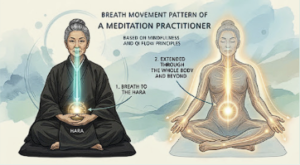
- With the in breath feel bright energy coming in through the nose to the hara
- Aware of the breath in the hara as a bright glow
- With the out breath, expand the breath / mind energy out of the body out into space
- Continue in this way
Two movement practice: Breath/mind
The Emergence of Inner Heat
At first, Jōshin Kokyū Hō appears straightforward.
One brings awareness to the breath, receives Reiki, and allows the body and mind to settle into a natural rhythm. As concentration deepens, however, many practitioners notice the arising of a gentle warmth at the hara.
This warmth is not something forced. It emerges naturally when attention, breath, and awareness begin to gather into a unified field. The scattered energies of thought, worry, and emotional contraction gradually settle. What was previously dispersed becomes collected.
Just as sunlight through glass generates heat, awareness concentrated through practice generates an inner warmth. This warmth is experienced physically, energetically, and psychologically. Muscles relax, breathing deepens, and the mind becomes less rigid and softens.
The warmth itself is not the goal. Rather, it is a sign that the scattered condition of body and mind is beginning to unify.
The Process of Melting
An interesting way to understand this experience is through the image of melting.
Throughout life we develop contractions in the mind and body. These may appear as anxieties, fixed beliefs, emotional wounds, habitual reactions, or even chronic physical tensions. We often carry them without realising it. When the warmth of practice develops, these frozen and constricted structures begin to soften.
Rather than trying to force afflictions away, Jōshin Kokyū Hō practice allows them to dissolve naturally. The practitioner learns to remain present while the heat of awareness gradually permeates areas of contraction. Just like ice needs warmth to become water, so too does the mind and body need warmth to soften.
Likewise, many forms of suffering do not disappear through effort alone. They transform when illuminated by sustained awareness and nourished by the vitality of Reiki.
The Inner Terrarium
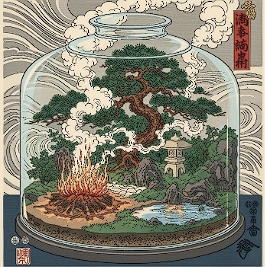
A useful metaphor for understanding this process is that of an inner terrarium.
Within a terrarium, warmth from the sun causes moisture to evaporate. The water rises, condenses, and eventually returns as droplets to nourish the environment below. Nothing is wasted. Everything participates in a natural cycle of transformation. Human experience functions in a remarkably similar way.
Difficult emotions, confusion, grief, anger, and fear need not be rejected. When held within the body of practice, they become part of a dynamic process. The warmth generated through breath and awareness causes these experiences to rise into conscious recognition. They are no longer hidden beneath habitual reactions.
As awareness deepens, they condense into understanding, wisdom, and compassion. What once appeared as an obstacle becomes nourishment for the path. The Reiki practitioner begins to recognise that the purpose of practice is not to escape experience but to transform their relationship to it.
The Womb Realm Perspective of Vairocana
From the perspective of the Womb Realm Mandala, this inner terrarium reflects the dynamic intelligence of reality itself. The various experiences that arise within consciousness are not separate from awakening. The emotional and mental patterns that seem problematic are simply aspects of the field seeking integration and illumination such as:
- When approached correctly, anger reveals energy and clarity
- Fear reveals vulnerability and connection
- Grief reveals love
- Confusion reveals the limits of conceptual thinking
The warmth generated through Jōshin Kokyū Hō allows these experiences to unfold without becoming trapped within them. They are welcomed into the mandala of practice and gradually transformed.
Melting into Openness
As practice matures, the sense of being a separate self struggling against experience begins to soften with the following more prevalent:
- The body feels more spacious
- The breath becomes effortless
- Thoughts lose their compulsive force
- Awareness itself feels warm, open, and luminous
In this way, Jōshin Kokyū Hō becomes more than a breathing method. It becomes a direct experience of purification through warmth, presence, and release. The practitioner learns to trust the natural intelligence of the process.
Like a terrarium thriving through its own internal cycle, the human being possesses an innate capacity for renewal. The breath provides the warmth, Reiki provides the nourishment, and awareness provides the space in which transformation can occur.
When these qualities come together, what was once frozen begins to melt, and what melts becomes available to flow freely once again. The practitioner discovers that awakening is not the acquisition of something new, but the gradual softening of everything that obscures what has always been present.
Practitioners may notice:
- Anxiety softening
- Grief becoming workable
- Anger losing its hardness
- Physical tensions releasing
- Old emotional patterns surfacing into awareness
Rather than suppressing or analysing these experiences, the practice invites us to sit within the warmth of awareness and allow them to dissolve naturally.
Just as frost melts when exposed to sunlight, many internal obstructions begin to soften when held in sustained presence.
How Long Should It Be Practised?
For beginners, 10 to 15 minutes daily is generally sufficient. Consistency is far more important than duration.
As the practice stabilises:
- 20 minutes daily allows the mind to settle more deeply
- 30 minutes daily often permits the melting process to become quite apparent
- 45 to 60 minutes can become a profound meditative practice, particularly when integrated with contemplation of the Reiki Precepts or Mahāvairocana practice
For dedicated practitioners, it is often better to practise:
- 20 minutes every day
rather than
- 60 minutes once each week.
The transformative effects arise through repeated gentle exposure to the process rather than exhaustive effort.
Signs You Have Practised Long Enough
A useful indicator is not the clock but the quality of your experience, you may notice:
- The breath has become effortless
- The body feels warmer and softer
- Mental chatter has reduced
- Awareness settles naturally in the Hara
- A feeling of openness or spaciousness emerges
At this point, it is often beneficial to conclude the session rather than striving for more.
Like a terrarium receiving sufficient warmth from the sun, the process works best when supported consistently and gently. Over months and years, Jōshin Kokyū Hō becomes less a breathing exercise and more a living alchemy in which the warmth of awareness continually melts contraction and returns the practitioner to their natural state of harmony and wholeness.