Reiki as a spiritual practice
The Hidden Treasures of Reiki
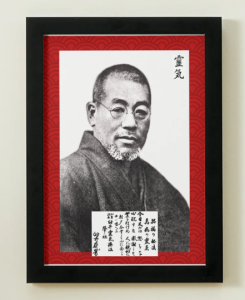 Over many years of practicing Reiki and Buddhism, the hidden treasures within the system of Reiki gradually began to reveal themselves. The genius of Mikao Usui became increasingly apparent, not only in the healing method he developed but in the way he crafted a complete system of spiritual cultivation.
Many people know Reiki only as a hands-on healing treatment. What often goes unnoticed is that Reiki is fundamentally a spiritual practice, with healing treatments emerging as a natural expression of that practice. The treatment aspect is a beautiful consequence of using the body as a vehicle for inner transformation and awakening. It benefits both the practitioner and those receiving treatment.
This often comes as a surprise because the methods and tools within Reiki were never intended solely for helping others. They were designed equally, if not primarily, for the practitioner’s own self-care, self-cultivation, and self-realisation.
In a spiritual context, the word healing can be somewhat misleading. Healing is not simply the removal of symptoms or discomfort. It is the gradual uncovering of our true nature. Usui himself pointed to this when he said:
“First the mind must be healed for the body to be sound.”
As practitioners begin to explore the nature of mind, they discover that beneath ordinary consciousness lies something more profound and universal. Through practice, we gradually come to recognise increasingly subtle dimensions of our being. This is the true healing of Reiki. It is a process of letting go of duality and learning to abide more fully in suchness.
Hidden Treasures
No Reiki teacher can show another person how to attain self-realisation. What they can do is provide a path of practice, a trail of breadcrumbs that points the student in the right direction.
In the beginning, this guidance is essential. The methods of Reiki help practitioners move from understanding the more obvious and tangible aspects of consciousness to recognising its subtler dimensions.
At the gross level, consciousness is experienced as thoughts, emotions, sensations, perceptions, and the countless objects that arise within the mind. At subtler levels, awareness itself comes into focus. We begin to recognise the space in which all experiences arise and dissolve.
To abide in awareness is simply to observe these appearances without attachment or clinging. Thoughts arise and pass. Feelings arise and pass. Sensations arise and pass. The practice is not to control them but to let them be, learning the art of simply letting go.
What Are We Letting Go Of?
This is a perfectly natural question and one that arises in the beginner’s mind.
 We begin by letting go of whatever obscures the natural clarity of mind. This requires an honest examination of our attachment, grasping, aversion, and habitual patterns. Through awareness, we come to recognise the ways in which we create our own suffering.
The Reiki Precepts serve as touchstones on this journey. They continually point us back towards clarity, reminding us when we have become caught in anger, worry, judgment, fear, or attachment.
The process is much like polishing a tarnished silver vase or watching clouds slowly drift away from the sun. Nothing new is added. Rather, what obscures our true nature is gradually removed. As the stains are polished away and the clouds begin to clear, the natural luminosity of mind reveals itself.
[Suchness refers to the true nature of reality, beyond concepts, words, and intellectual understanding.]
Using the Body as a Vehicle
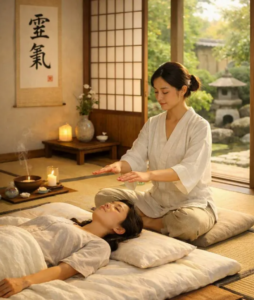 One of the unique features of Reiki is the way it uses the body as a support for spiritual development.
The hands become an anchor for awareness. Rather than becoming lost in conceptual analysis, practitioners learn to trust direct experience. Through placing the hands and resting in awareness, they begin to cultivate presence, openness, and surrender.
This is often easier said than done.
The beginner’s mind naturally wants answers.
Why is this happening?
What does this sensation mean?
Am I doing it correctly?
Am I progressing?
These questions are normal. Yet over time, Reiki gently encourages us to move beyond analysis and into direct experience.
Following the Breadcrumbs
Like all learning, spiritual practice begins with simple steps. Reiki uses the body as a vehicle for accessing deeper levels of consciousness and awareness.
As trust develops, the practitioner slowly learns to let go. The hands are placed. Awareness is present. There is no need to create an experience, chase an outcome, or force a result.
Whether the hands feel hot or cold, tingling or still, becomes less important. Attention shifts from the phenomenon itself to the awareness in which the phenomenon is arising.
Gradually, practitioner and practice become less divided. The treatment unfolds naturally, like a dance in which effort gives way to flow.
The practitioner no longer seeks to control the experience.
Instead, they simply hold the space.
And within that space, healing, insight, and transformation arise in their own time.